
Hidden within Namibia’s Namib-Naukluft National Park lies Deadvlei, one of the most surreal places on earth.
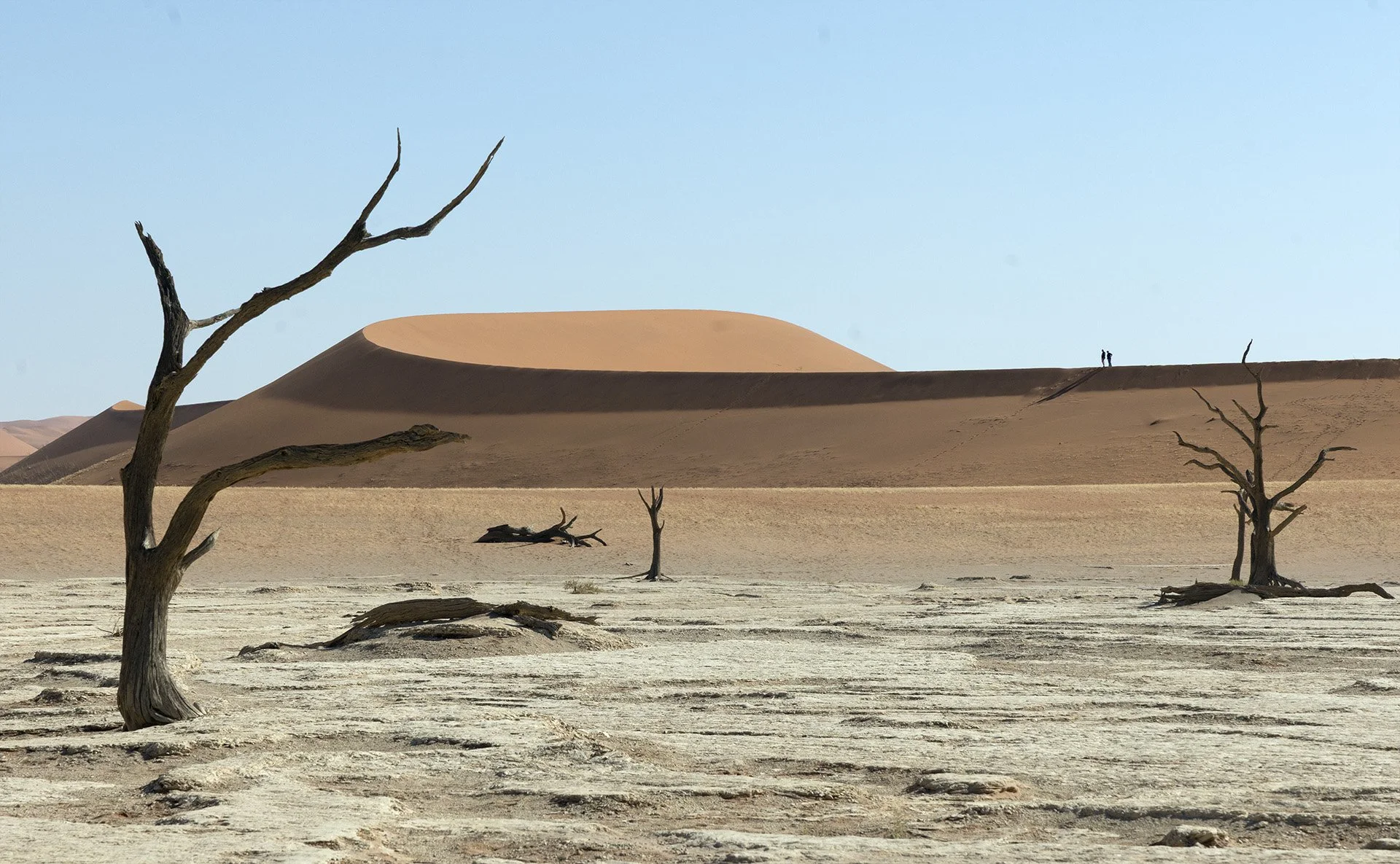
Deadvlei, Namib-Naukluft National Park, Namibia
Once a clay pan fed by the Tsauchab River, it dried up about 900 years ago, leaving behind a white, sun-bleached basin scattered with the dark skeletons of ancient camel thorn trees.
Surrounded by towering red dunes—some of the tallest on the planet—Deadvlei feels suspended in time. Nothing grows here, nothing decays. The landscape is still and silent.
This is the story of our family’s photography trip into one of Namibia’s most iconic valleys.
LEAVING IN THE DARK
We left our lodge at 6 a.m. - long before sunrise—not only because Deadvlei is best experienced in the cool hours of morning, but because as photographers, we chase light. Soft light, gentle shadows, the shifting colours of dawn - these are the moments we try to teach our teenagers to look for as well.
Part of traveling with them in this way is encouraging them to see. To experiment with their own cameras, to notice how quickly light changes, and to feel the small triumph that comes from capturing an image they’re proud of. Early mornings become lessons in patience, perception, and the quiet joy of creating something that feels right to them.
Driving into complete darkness and desert cold. Namibia’s winter mornings can be surprisingly sharp, and the cold hit our faces the second we walked outside. We were bundled up in layers—strange to imagine when you know the day will end in thirty-degree heat.
The staff at the lodge had kindly prepared freshly brewed coffee, breakfast, and lunch boxes for us, all neatly packed. Their warmth and hospitality made the early start feel easier.
Driving through the desert in the dark was magical. The gravel road stretched out in front of us under a sky full of stars. Slowly the light began to change. As we approached Sesriem, the first colours of sunrise washed over the dunes.
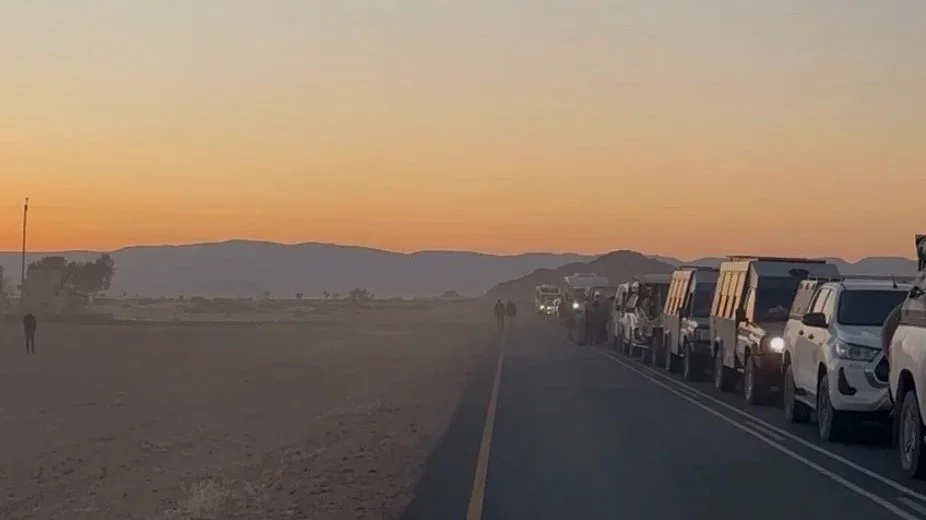
Sesriem - Cars lined up quietly waiting for the gates to open right after sunrise.
We reached the Sesriem gate at about 7 am along with many other travelers. The sky was shifting into pale pinks and oranges.
As we lined up, park rangers walked from vehicle to vehicle, so we could pay the entrance fee right away. By the time the gates opened right after sunrise, we had already payed the entrance fee and could drive right into the park. No extra waiting or queuing.
A VALLEY WAKING UP
As we drove into the valley, the light grew stronger. Shadows stretched across the sand. The dunes—those gigantic, sculptural shapes—shifted from deep purples to glowing reds and oranges.
Traffic was a bit heavy at first. Everyone enters at the same time, all hoping to catch the best morning light. We took our time. We stopped to feel the sun warming the air, to breathe in the quiet, to watch the fog and the sunrise between the dunes together with the kids.
It was exactly the kind of morning we hope our kids will remember. Not just for the photos they took, but for the feeling of chasing something beautiful together. And part of that journey is to pause when they see something that inspires them, even if we adults are tempted to keep moving. Giving them the time to explore their own perspective, to photograph what speaks to them, feels just as important as the images we hope to capture ourselves.
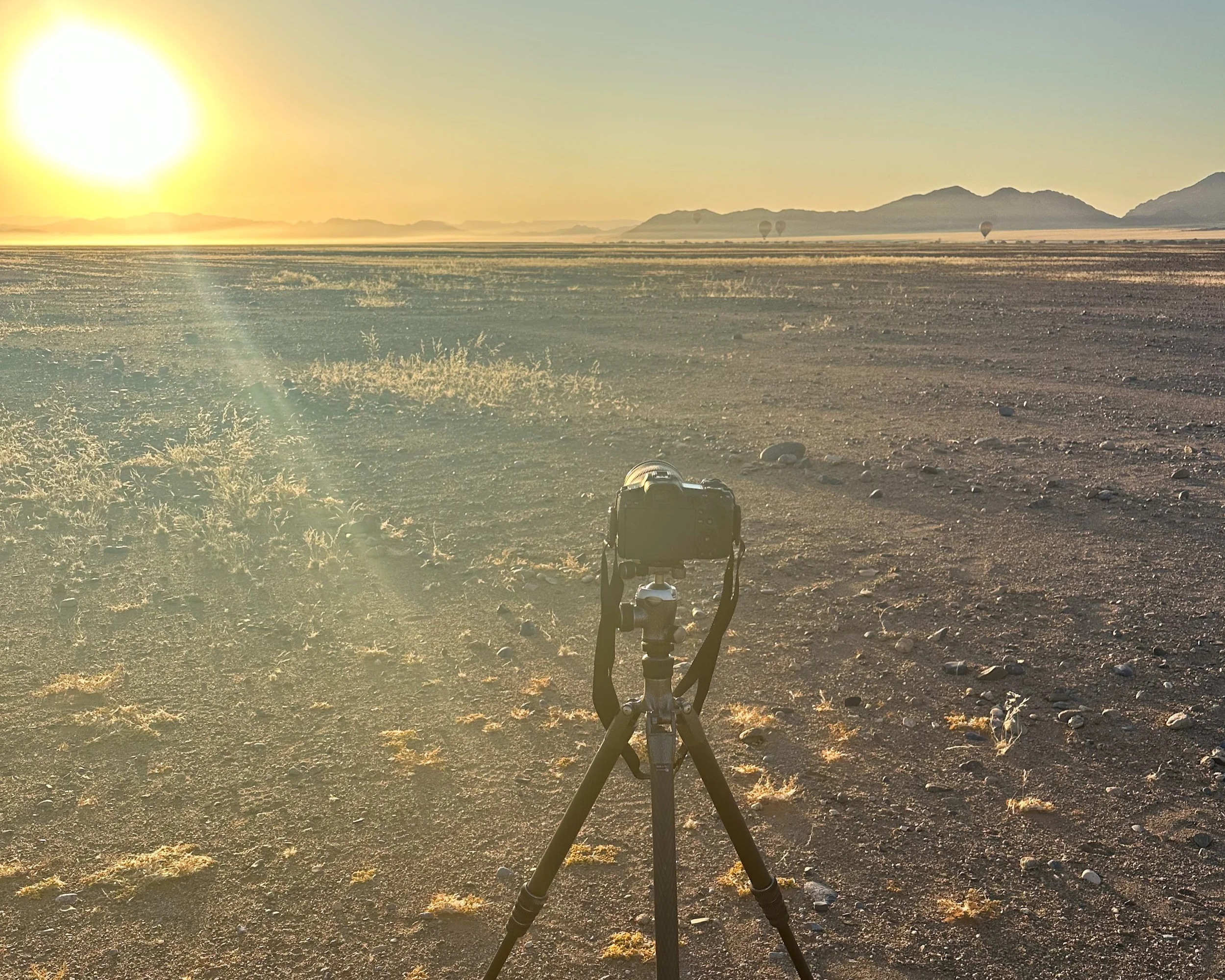
My daughter wanted to stop and photograph these hot air balloons in the morning light.
THE HIKE
We eventually reached the 2WD parking area for Deadvlei. From here, most visitors either hire a local driver with a 4x4 or attempt the sandy drive themselves to the final parking area, closer to the walking trail. The sand is deep and tricky, and many people get stuck—sometimes for hours—while waiting (and paying) for towing services.
We paid a wonderfully kind woman to drive us through the dunes. Supporting local workers felt like the right thing to do rather than saving money and drive ourselves (and probably get stuck in the deep sand). She told us stories about the valley, the wildlife, and the shifting sands as she drove.
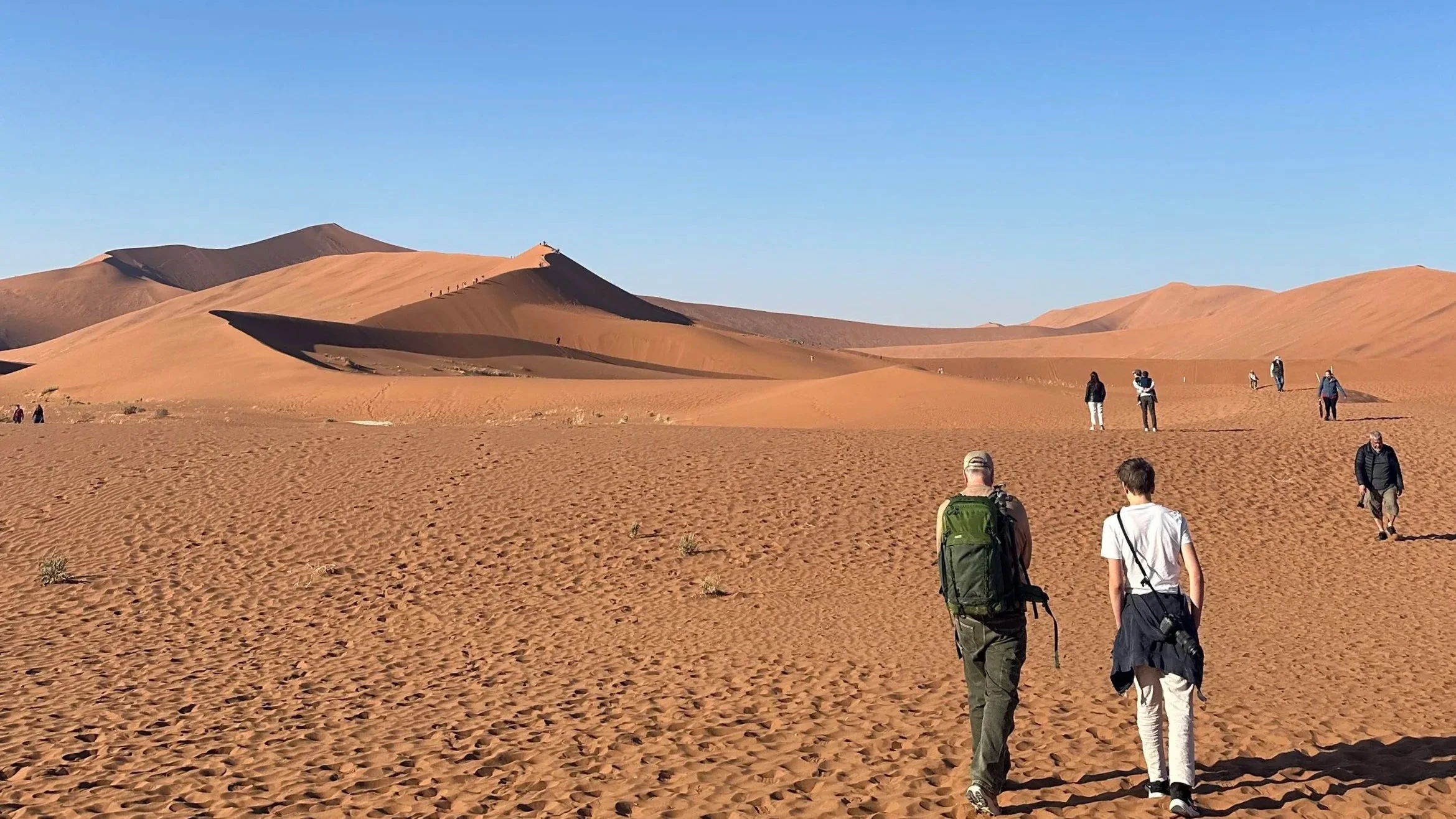
From the drop-off point, we walked about 1.5 kilometers through soft sand between towering dunes.
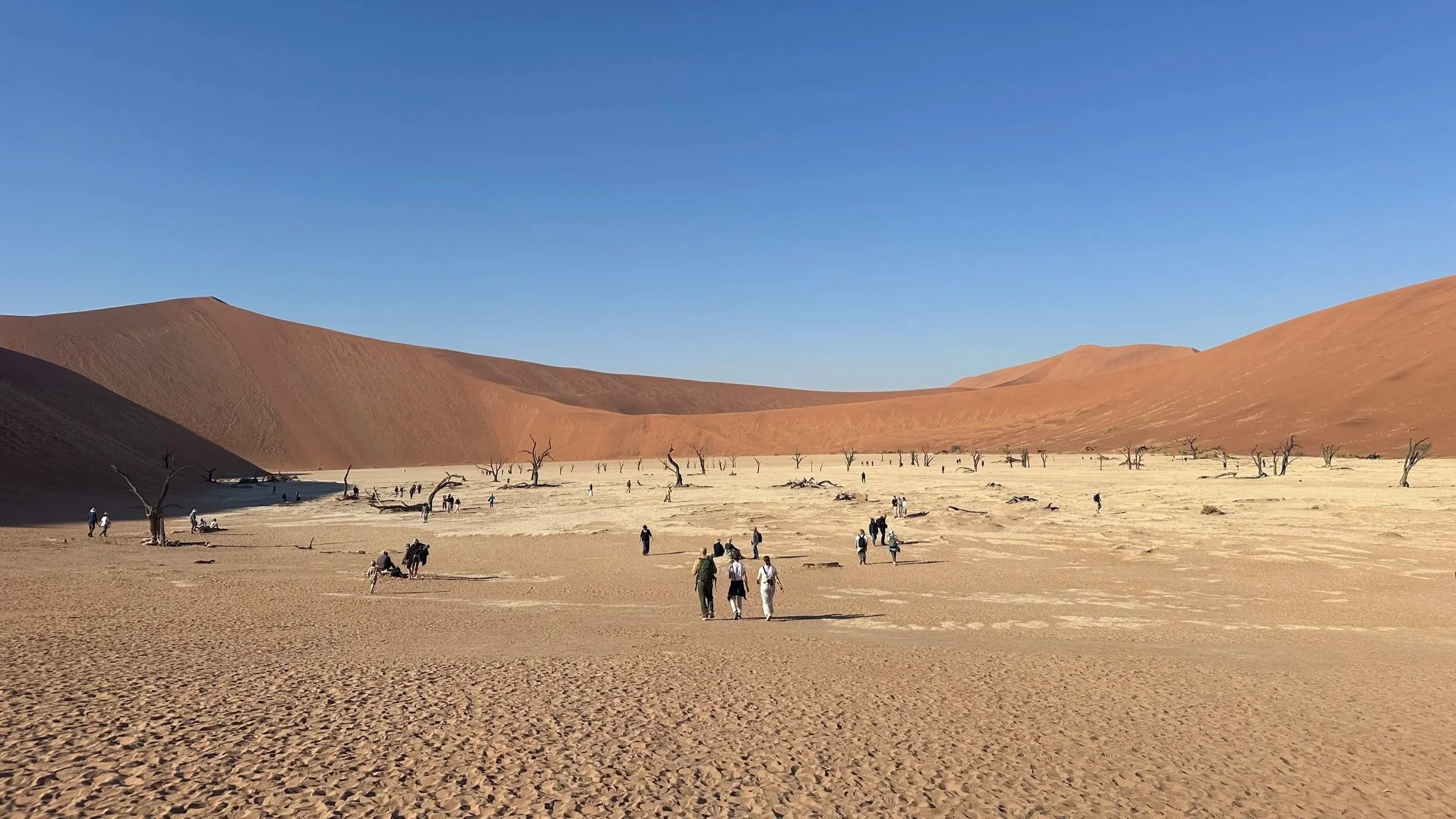
The First Sight of Deadvlei
DEADVLEI
Nothing prepares you for the first glimpse of the clay pan. The ground is pale and cracked, like a giant mosaic. The dunes behind it look impossibly steep, glowing warm orange in the sun. Scattered across the pan stand the fossilized camel thorn trees, dead for hundreds of years yet still standing like ghosts of a greener world.
I found myself staring at them with a sense of awe.
It was impossible not to think about the time they’ve witnessed. These dead camel thorn trees have been here for nearly centuries—silent observers while Genghis Khan built his empire, while the Black Death swept across Europe, while Leonardo da Vinci painted the Mona Lisa, and while Shakespeare wrote his plays.
And yet the trees remain unchanged, preserved by the desert’s extreme dryness, standing quietly in a landscape that seems untouched by time.
It’s humbling to stand in a place where time has practically stopped.
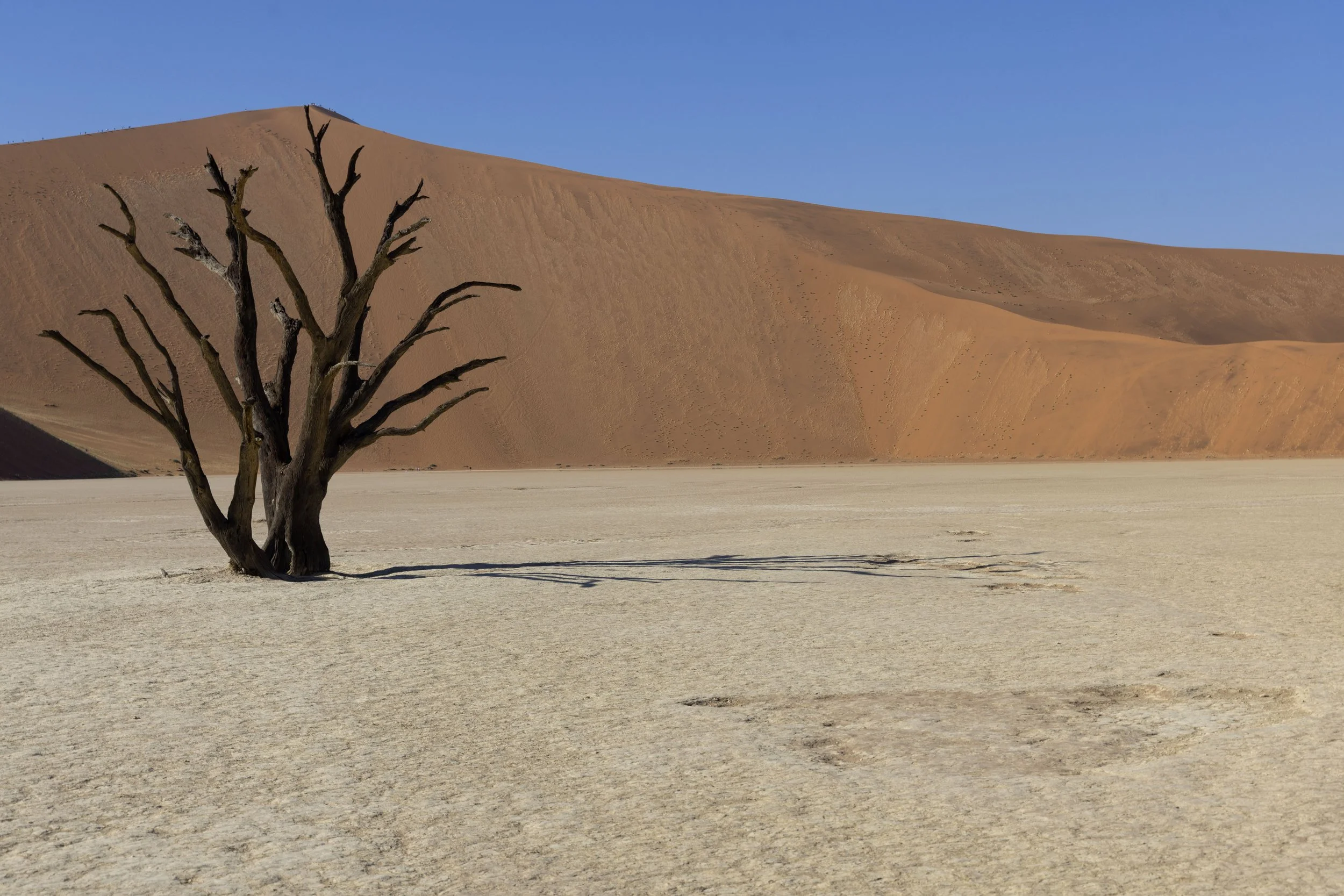
Zoom in to see all the people hiking this huge dune.
A PLACE THAT STAYS WITH YOU
For the whole family, Deadvlei became an experience we may never encounter again—a landscape so extraordinary that it stands apart from ordinary memories. Waking up at 5 a.m., stepping into the cold darkness, and committing to a long drive through the desert is rarely easy, especially when a warm bed feels far more appealing.
But this day proved something important: the effort is often worth it. By choosing to rise early, we witnessed a desert waking in soft, shifting colours and photographed a landscape in light that exists only for a brief moment each morning.
Photography also gave us a different way of being present—slowing down, noticing details, and taking in the valley with a kind of attention that doesn’t always happen in everyday life. Through the lens, our kids engaged with the place more deeply, observing shapes, shadows and textures.
In the end, we experienced something truly exceptional—both the beauty of the valley itself and the quiet reward that comes from meeting the world with curiosity, patience, and the willingness to step outside what is comfortable.
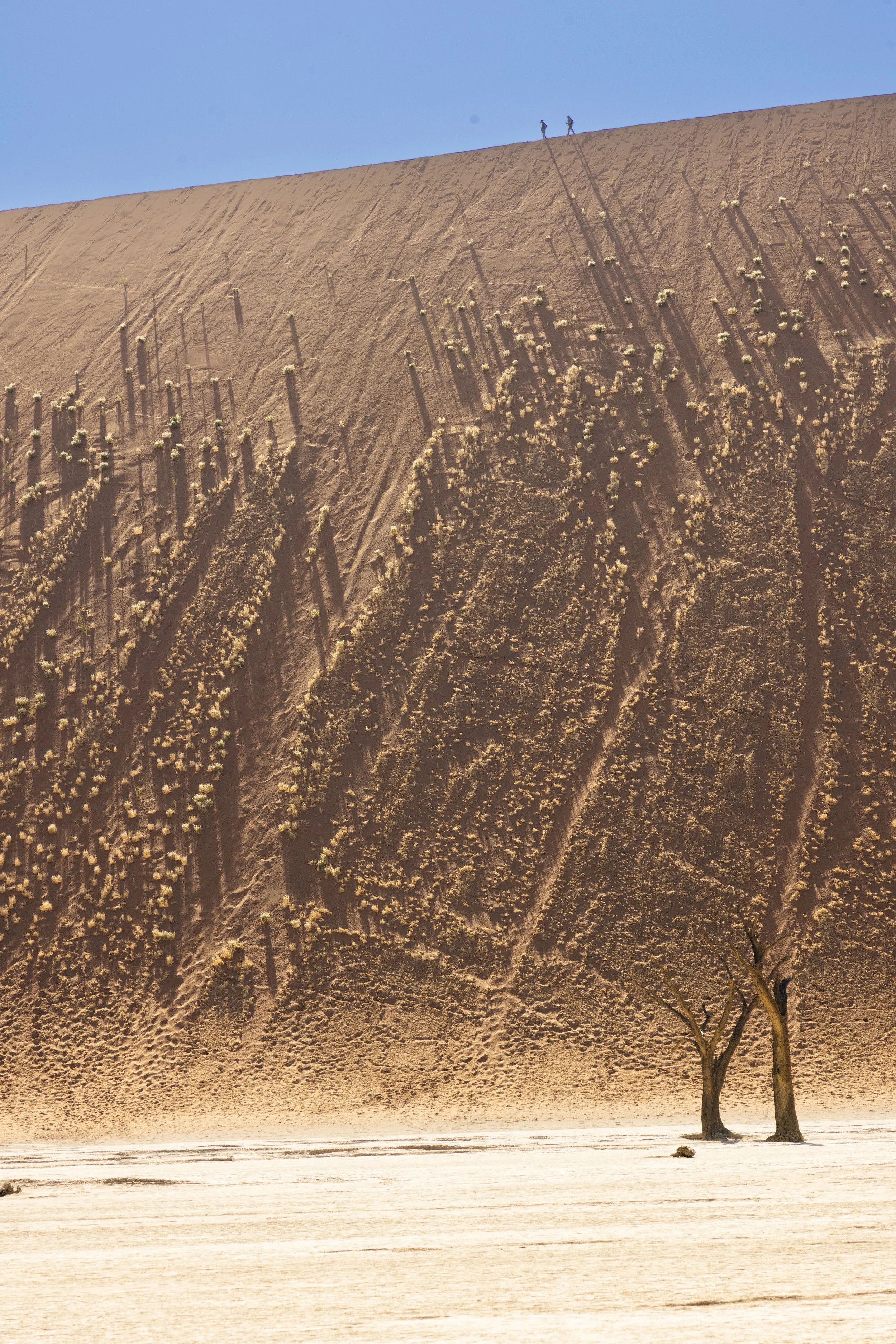
My husband and son hiking the dune back to the car
Our family trip to Deadvlei was more than just sightseeing—it felt like stepping into a painting, or into a story written by wind and time. From the cold, starry morning to the blazing midday sun. From the quiet dunes to the ancient trees, everything about this place stays with you. I am happy we were able to bring the kids and enjoy this adventure together as a family.
